Facial hair - or pogonotrophy is a phenomena found in humans - usually men.
It is a secondary sex characteristic - the primary being the genitalia and, but the secondary are other characteristics that demonstrate the sex of an animal, for example, the male mandarin duck's plumage, a peacock's tail, the horn of a narwhal.
Facial hair starts during puberty, usually between ages 11 and 20. Hair begins to grow around the groin, under the arms and then creeps up on to the face. The top lip comes first, starting on the outside edges and moving inward.
But why do we have facial hair?
Well, hair has many thermodynamic properties - if you were to look at it under a microscope you'd see its composed of coils of keratin - the thing that makes hair, nails and harder bits of skin. These coils mean the hair can act like a spring, stretching to over 150% of its own length and still return to normal.
It is also permeable and holds water. It acts as a very good thermal conductor and aids transfer of heat away from the body.
It also moves the sense of touch off the skin and into the air, as follicular nerves detect movement of air.
But why do humans have so little body hair compared to primates?
There are two explanations:
1) National selection: Those with less hair have fewer parasites and live longer, therefore breed more and pass their hairless genes on.
2) Sexual selection: The younger (and therefore the more hairless) a potential mate looks the more likely we are to feel protective over it. Thus the more hairless choices in the human pack are more likely to breed and have hairless children.
This is called neotemus or pedomorphism and is common in a lot of animals, including humans whereby they deliberately appear younger to seem less of a threat and increase the chances of one of their own species - or even a different species to look after them.
Facial hair grows when testosterone is released into the system.
BEARDS
Grows on the chin, cheeks and neck. It grows faster in the summer as the body produces more dihydrotestosterone which is the most powerful hair-growing hormone.
The Ancient Egyptians grew patch on their chins and dyed them with henna. Some women, with beard envy, also wore false gold beards called a postiche.
Adam Olearius in the 1630s wrote of what was then Persia (now Iran): That when the King executed his steward, he was sad afterwards, saying, "What a pity that a man possessing such fine mustachios should have been executed." Which goes to show how important facial hair was back then.
Or maybe it was just the steward had no other redeeming feature.
The Ancient Greeks viewed it as virile and if you saw your friend you would often touch their beard instead of say, shaking their hand. The Greeks loved beards and Spartans were even punished by having their beards shaved.
Then Alexander the Great comes along and gets scared because soldiers are being killed on the battlefield left, right and centre. Enemy soldiers were using the beards as leverage to yank down the head and decapitate the hapless victim. Alex ordered his army to shave. And started a revolution.
Not in the army, they were good soldiers and did what they were told, but across the world where shaving suddenly became very fashionable, Old Aleey G had started a trend.
Many were horrified by the turn of events - previously a beard was a symbol of your manhood. But it was popular. Even Aristotle was at it, much to the chagrin of other philosophers as many of the deep thinkers thought a beard was a symbol of their profession. It gives rise to the idiom, "The beard does not make the sage." Which I think Aristotle would be comforted by.
In Rome they also shaved. Mostly because the Greeks didn't and they wanted to distinguish themselves. When a Roman boy reached the age of maturity, he'd be given a toga instead of the tunic he wore in his youth. And he was ceremonially shaved, the hair put into a box and burned in sacrifice to the gods.
In 1705, Peter the Great (a different the Great this time, keep up), wanted Russian society to be more like the further developed Western world. He saw this as being presentable and clean-shaved. So he passed a beard-tax: if you wanted a beard now you had to pay for it.
If you did pay the ransom you were rewarded with a special coin to present to officials that challenged your hairy chin. On one side it was inscribed with an eagle. On the other, in true Russian fashion, was a picture of a beard and the phrase, "The beard is a superfluous burden."
But it wasn't even the first beard tax. Henry VIIIth started one, and what's more his daughter Queen Elizabeth I carried it on! Under this tax, only beards over 2 weeks' growth were taxed a percentage based on your cultural position.
MOUSTACHES
...Only really started appearing around 300BC. In technological terms, they were technically achievable from about 9500BC with a piece of sharpened stone, but nobody really was into the idea, according to portraits we've found, until 300 BC.
The best moustaches around the world are judged by the World Beard and Moustache Championships. There are several catagories:
-Natural: No styling products or false supports. Length is restricted to 1.5cm beyond the upper lip.
-English: Minimal styling products, no length limit, preferably as long as possible and brushed into a centre parting.
-Dali: Straight, waxed, arching or pointing up or down
-Imperial: Small and busy with the tips pointing up.
-Freestyle: Everything else.
There is a difference between a beard with a moustache and top, and not. Most people assume the goatee is like David Brent, but actually the goatee only refers to the chin. If you add a moustache to it, like Ricky Gervais did, it's actually called a Van Dyck.
The Religious Implications of Facial Hair
In Greece, Zeus and Poseidon have beards but Apollo doesn't.
Christ has a beard, but curiously on most crucifixes there aren't chunks missing where the beard was plucked by his tormentors.
In Hinduism, Shaivite ascetics have beards as they aren't permitted to own anything, including a razor.
In Islam the prophet Muhammad declared growing a beard was Summah, therefore necessary to get into heaven.
In Judaism it is forbidden to shave with a blade or razor and the Torah forbids pressing a sharp blade against the skin. However, in the modern world, scissors or an electric razor can take their place.
The Zohar is the head of the Kabbalah movement and claims the hairs of his beard are the channels of energy that flows from above to the human soul.
Saturday, August 13, 2011


Friday, August 12, 2011
Aliens and Area 51
Extraterrestrial life is life beyond that which belongs to the Earth. The question of whether life exists outside the earth has puzzled many scientists for years.
What is required for life? On Earth it is CHNOPS (Carbon, Hydrogen, Nitrogen, Oxygen, Phosphorus and Sulphur). These are the most common and important elements to make biological molecules on this planet. Phosphorus is also used to make cell membranes and sulphur is used to make amino acids. In the baking process, Nitrogen, Hydrogen and Oxygen make carbohydrates and sugars, DNA, RNA and cellulose for plants, methane, proteins and phosphates for genetic material and energy transfer. There's one ingredient missing though, and that's water. It acts as a solvent to chemically bond the ingredients together and provide oxygen to the organism.
Earth is rich in H20 (water) naturally, and back in the day (like really back in the day) meteorites brought CHNOPS in through the atmosphere.
I say meteorites because we must be specific. Asteroids have, of course, never hit earth. Let me explain why:
An asteroid is a small body of rock, carbon and metal orbiting the sun
A comet is a small body of dirt and ice that lets off a trail when getting close to the sun.
A meteroid is part of an asteroid or comet
A meteor is one that hits the earth's atmosphere and disintegrates on entry.
A meteorite is one that makes it all the way through and hits the surface of the Earth.
The reason why water+CHNOPS should make life elsewhere is because the Earth and many other planets are made of space gas, "stardust" (from supernovae stars) and "space dust" (bits of planets and non-supernovae stars) all twirled together through nebulae like a giant cosmic Nigella Lawson. So if we start with the same basic ingredients in our recipe, shouldn't we end up with the same product?
There could also be silicon life. But silicon is not as good a base as carbon. Silicon is similar to carbon but bigger and creates more monotonous shapes than the flexible and malleable carbon. It's also less reactive in forming bonds with other elements.
If there is silicon life though, if it breathed in oxygen it would breathe out sand due to the chemical processes of silicon based life. The hope for silicon-based life remains, however as if it was in an atmosphere rich in sulphuric acid, then the chains of molecules would actually be more stable than carbon-and-water chains on Earth.
Also, if this silicon life-form lived in temperatures around 1,000ºC (or 1,800ºF) the silicon sand it breathed out would be a liquid secretion. Sci-Fi writers take note: I want royalties for a liquid-sand-squirting super-hot, sulphuric-acid monster.
Where are we going to find this silicon-based life, though? Well, here on Earth. One of the earliest lifeforms were living clay minerals, they were based on silicon. Also diatoms - a type of algae - have a silicon-based skeletal structure.
So if silicon is more boring than carbon, what about in the other direction? A planet rich in Boron could produce life with even a great complexity of life. However, at least in these parts of the universe, boron is quite rare.
Metal oxides of titanium, aluminium, magnesium and iron could potentially make life forms at extremely high temperatures, and would create an awesome race of creatures I'd like to term, "rust life."
There could also be plasma life. A plasma is where gas is super-heated and dissolves its bonds due to electrons floating around. It then becomes very reactive in magnetic fields. A simple example of a plasma is neon light.
Plasma, as generated on earth in laboratories or in the middle of electrical storms and grow, multiply by itself and even communicate on a basic level with other plasma balls - several phenomena we deem to be part of life as we know it.
This would be good news for the soul of G Buren. He was a scientist who lost a bet when everyone told him nothing could live on the sun. He was even taken to court for the money and his widow was pursued after his death to pay up on this wager .
The believe in extraterrestrial life dates back to antiquity. In Hinduism there's six planes of existence - Deva, Asura, Manussa, Tiryagyoni (these last two are the only ones on Earth), Preta and Naraka.
In Norse Mythology there's nine: Manheimr (land of the humans), Vanir and Asaheimr (land of the Gods), Jotunheimr (land of the giants), Alfheimr (land of the elves), Hel (land of the dead), Suartalfaheimr (land of the dark elves), Niflheimr (land of ice) and Muspeltheimr (land of fire).
The Jewish Talmud says that at the time it was written there were 18,000 other worlds than this one.
In Islam, in the Qur'an, it states God is the Lord of All Worlds (plural), it also makes reference to a Jinn (or genie) who lives in the heavens above Earth.
Christianity denies aliens officially and got really annoyed when in the 16th Century Giordano Bruno came up with the idea that the universe was infinite, the sun just one star and all stars had their own planets and life systems. He was burned at the stake.
In the 1850s, they saw Mars for the first time and the idea of Martian life hasn't left us to this day. In 1911 there was even a book published called Mars and its Canals: A Guide to Travelling the Canals of Mars - A Scientific Study.
It was, of course, later discovered that these canals weren't filled with water and were just an optical illusion of the sun's light.
Even back in 10th Century Japan they had a folk tale of the Bamboo Cutter who finds a baby the size of his thumb in a stalk of glowing bamboo. The baby's hair shined like the moon. She is beautiful as she grows up into a normal-sized human and rebuffs all attempts at marriage, and cries longing to return to the moon.
Eventually the moon people come, wipe her memory and she goes back home. Leaving the parents that brought her up completely distraught at their loss of a child.
The search for the moon people continues in the modern day: we're looking for single-celled life. We've found gas emissions on Mars, some imprints that could be fossils of nanobacteria on meteorites and methane signatures in Mars' atmosphere - all signs that there could be life on Mars afterall. However, as yet, nothing conclusive.
SETI: The Search for Extra-Terrestrial Intelligence has radio telescopes pointed at the sky. The closest they've come is 06EQUJ50 - a signal where each symbol represents the amplitude of the wave received. 0 is very low, up to 9, then A through to Z (the highest). The U halfway through the signal is the highest recording ever made from space, 30 times louder than the background radiation of space. The whole transmission lasted 72 seconds from the direction of Sagittarius and has never been repeated.
Scientists being the type of people they are, named it after the first words spoken when receiving this signal: it's now forever known as "The WOW Signal."
The best place to look for ET is Gliese 581g. A red-dwarf-orbiting planet in the habitable zone of orbit. It's about 2x the size of the Earth.
Area 51 is a big alleged conspiracy that everyone thinks is a government cover-up for finding aliens. Area 51 started out in WW2 as a bombing practice range. In '55 it was used to test the U2 spy planes.
It is part of a large military complex called Groom Lake, also used for atomic bomb tests. Area 51 shares a border with Areas 15, 10, 9, 7, 3, 11 and 5.
Groom Air Base appears to be used for the testing of new and experimental Air Craft. This includes the U2 as previous mentioned and operation OXCART - using the A-12 Mach 3 recon aircraft which became the USAF SR-71 Blackbird.
The US Federal Government only says that it has an operating location near Groom Lake but will say nothing more.
If you go there you'll be followed by private security guards working for the company Wachenhut which became G45 last year.
Lethal force is authorised but so far has never been used. They just radio for the sheriff. $600.00 fines are the norm if they get you and some visitors have even been detained on public land for pointing cameras at the base.
The base isn't on any US maps, satellite pictures or similar. Many UFOlogists have taken their own amateur pictures from surrounding mountains.
The US government declares a taxable value of $2million for the private holdings on the base. No tax assessors are allowed on site to make an assessment, however.
People think that Area 51 has been involved in alien spaceship landings or crashes, development of energy weapons, weather control machines, time travel, teleportation or even as a meeting ground for the Majestic 12 (a secret organisation set up by Harry Truman to investigate UFOs).
Maybe we'll never know.
What is required for life? On Earth it is CHNOPS (Carbon, Hydrogen, Nitrogen, Oxygen, Phosphorus and Sulphur). These are the most common and important elements to make biological molecules on this planet. Phosphorus is also used to make cell membranes and sulphur is used to make amino acids. In the baking process, Nitrogen, Hydrogen and Oxygen make carbohydrates and sugars, DNA, RNA and cellulose for plants, methane, proteins and phosphates for genetic material and energy transfer. There's one ingredient missing though, and that's water. It acts as a solvent to chemically bond the ingredients together and provide oxygen to the organism.
Earth is rich in H20 (water) naturally, and back in the day (like really back in the day) meteorites brought CHNOPS in through the atmosphere.
I say meteorites because we must be specific. Asteroids have, of course, never hit earth. Let me explain why:
An asteroid is a small body of rock, carbon and metal orbiting the sun
A comet is a small body of dirt and ice that lets off a trail when getting close to the sun.
A meteroid is part of an asteroid or comet
A meteor is one that hits the earth's atmosphere and disintegrates on entry.
A meteorite is one that makes it all the way through and hits the surface of the Earth.
The reason why water+CHNOPS should make life elsewhere is because the Earth and many other planets are made of space gas, "stardust" (from supernovae stars) and "space dust" (bits of planets and non-supernovae stars) all twirled together through nebulae like a giant cosmic Nigella Lawson. So if we start with the same basic ingredients in our recipe, shouldn't we end up with the same product?
There could also be silicon life. But silicon is not as good a base as carbon. Silicon is similar to carbon but bigger and creates more monotonous shapes than the flexible and malleable carbon. It's also less reactive in forming bonds with other elements.
If there is silicon life though, if it breathed in oxygen it would breathe out sand due to the chemical processes of silicon based life. The hope for silicon-based life remains, however as if it was in an atmosphere rich in sulphuric acid, then the chains of molecules would actually be more stable than carbon-and-water chains on Earth.
Also, if this silicon life-form lived in temperatures around 1,000ºC (or 1,800ºF) the silicon sand it breathed out would be a liquid secretion. Sci-Fi writers take note: I want royalties for a liquid-sand-squirting super-hot, sulphuric-acid monster.
Where are we going to find this silicon-based life, though? Well, here on Earth. One of the earliest lifeforms were living clay minerals, they were based on silicon. Also diatoms - a type of algae - have a silicon-based skeletal structure.
So if silicon is more boring than carbon, what about in the other direction? A planet rich in Boron could produce life with even a great complexity of life. However, at least in these parts of the universe, boron is quite rare.
Metal oxides of titanium, aluminium, magnesium and iron could potentially make life forms at extremely high temperatures, and would create an awesome race of creatures I'd like to term, "rust life."
There could also be plasma life. A plasma is where gas is super-heated and dissolves its bonds due to electrons floating around. It then becomes very reactive in magnetic fields. A simple example of a plasma is neon light.
Plasma, as generated on earth in laboratories or in the middle of electrical storms and grow, multiply by itself and even communicate on a basic level with other plasma balls - several phenomena we deem to be part of life as we know it.
This would be good news for the soul of G Buren. He was a scientist who lost a bet when everyone told him nothing could live on the sun. He was even taken to court for the money and his widow was pursued after his death to pay up on this wager .
The believe in extraterrestrial life dates back to antiquity. In Hinduism there's six planes of existence - Deva, Asura, Manussa, Tiryagyoni (these last two are the only ones on Earth), Preta and Naraka.
In Norse Mythology there's nine: Manheimr (land of the humans), Vanir and Asaheimr (land of the Gods), Jotunheimr (land of the giants), Alfheimr (land of the elves), Hel (land of the dead), Suartalfaheimr (land of the dark elves), Niflheimr (land of ice) and Muspeltheimr (land of fire).
The Jewish Talmud says that at the time it was written there were 18,000 other worlds than this one.
In Islam, in the Qur'an, it states God is the Lord of All Worlds (plural), it also makes reference to a Jinn (or genie) who lives in the heavens above Earth.
Christianity denies aliens officially and got really annoyed when in the 16th Century Giordano Bruno came up with the idea that the universe was infinite, the sun just one star and all stars had their own planets and life systems. He was burned at the stake.
In the 1850s, they saw Mars for the first time and the idea of Martian life hasn't left us to this day. In 1911 there was even a book published called Mars and its Canals: A Guide to Travelling the Canals of Mars - A Scientific Study.
It was, of course, later discovered that these canals weren't filled with water and were just an optical illusion of the sun's light.
Even back in 10th Century Japan they had a folk tale of the Bamboo Cutter who finds a baby the size of his thumb in a stalk of glowing bamboo. The baby's hair shined like the moon. She is beautiful as she grows up into a normal-sized human and rebuffs all attempts at marriage, and cries longing to return to the moon.
Eventually the moon people come, wipe her memory and she goes back home. Leaving the parents that brought her up completely distraught at their loss of a child.
The search for the moon people continues in the modern day: we're looking for single-celled life. We've found gas emissions on Mars, some imprints that could be fossils of nanobacteria on meteorites and methane signatures in Mars' atmosphere - all signs that there could be life on Mars afterall. However, as yet, nothing conclusive.
SETI: The Search for Extra-Terrestrial Intelligence has radio telescopes pointed at the sky. The closest they've come is 06EQUJ50 - a signal where each symbol represents the amplitude of the wave received. 0 is very low, up to 9, then A through to Z (the highest). The U halfway through the signal is the highest recording ever made from space, 30 times louder than the background radiation of space. The whole transmission lasted 72 seconds from the direction of Sagittarius and has never been repeated.
Scientists being the type of people they are, named it after the first words spoken when receiving this signal: it's now forever known as "The WOW Signal."
The best place to look for ET is Gliese 581g. A red-dwarf-orbiting planet in the habitable zone of orbit. It's about 2x the size of the Earth.
Area 51 is a big alleged conspiracy that everyone thinks is a government cover-up for finding aliens. Area 51 started out in WW2 as a bombing practice range. In '55 it was used to test the U2 spy planes.
It is part of a large military complex called Groom Lake, also used for atomic bomb tests. Area 51 shares a border with Areas 15, 10, 9, 7, 3, 11 and 5.
Groom Air Base appears to be used for the testing of new and experimental Air Craft. This includes the U2 as previous mentioned and operation OXCART - using the A-12 Mach 3 recon aircraft which became the USAF SR-71 Blackbird.
The US Federal Government only says that it has an operating location near Groom Lake but will say nothing more.
If you go there you'll be followed by private security guards working for the company Wachenhut which became G45 last year.
Lethal force is authorised but so far has never been used. They just radio for the sheriff. $600.00 fines are the norm if they get you and some visitors have even been detained on public land for pointing cameras at the base.
The base isn't on any US maps, satellite pictures or similar. Many UFOlogists have taken their own amateur pictures from surrounding mountains.
The US government declares a taxable value of $2million for the private holdings on the base. No tax assessors are allowed on site to make an assessment, however.
People think that Area 51 has been involved in alien spaceship landings or crashes, development of energy weapons, weather control machines, time travel, teleportation or even as a meeting ground for the Majestic 12 (a secret organisation set up by Harry Truman to investigate UFOs).
Maybe we'll never know.
Cadbury's Creme Eggs
Cadbury's Creme Eggs are a brand of confectionary made to look like a chocolate brown egg filled with white albumen and the yellow embryo utellus (or yolk).
They are based on the chicken's egg which has been a popular choice of food for thousands of years. Usually they are unfertilised as the hens are kept without roosters. However, just in case you're worried, if your egg happens to be fertilised it'll make little nutritional difference. Furthermore the refrigeration process that most eggs go through prevent the embryo from developing.
However, in the Phillippines, China, Laos and Thailand, Cambodia and Vietnam, you can buy and eat what are called, "wrapped eggs," "feathered eggs," or, "flush eggs."
These are eggs where the embryo inside has been incubated and allowed to develop for nine days and then held to the light to check their development. If they've developed well they're given a further 8 days to develop and then sold to be eaten.
If they haven't developed well they are sold as, "pennoy" which look, smell and taste like a regular hard-boiled egg.
When eaten at the 17 day mark the embryo hasn't developed well enough to develop a beak, feathers or claws. But there are some real connoisseurs who like them at 21 days, where they are more recognisable as a baby chick, and the bones are firm but tender.
The production of these eggs is all done by hand, and the people that do it take it very seriously, it's considered an artform with each vendor carefully caring for his eggs by hand.
They are sold both as snacks in a street market or in restaurants as haute quisine.
Some people take it even further by wrapping an egg in alkaline clay, ash, salt, lime (the mineral not the fruit) and crushed rice husks before burying it for several months. This causes the egg white to become a dark green like jade and the yoke to become a transparent brown. You now eat it with salt.
However, our eggs are chocolate ones. And are often given as gifts.
The giving of eggs as gifts started 2,000 years ago with the Zoroastrian New Year as a symbol of new life. The reason for the connection between the Easter Bunnies and giving out eggs is because hare forms (where they raise their young, like rabbit burrows or badger sets) are very similar to plover nests. Plovers are small birds similar to lapwings who bury their eggs. In Australia they use bilbies instead of bunnies. Those are small marsupials related to bandicoots. They look like long-nose rats.
The eggs became coloured following the Christian legend that Mary Magdalene was carrying some boiled eggs to share with her friends outside Jesus' tomb when Jesus arose. He turned her eggs red (and that's not a euphemism). Then Mary goes to the Emperor of Rome to tell him Jesus has risen. He doesn't believe her. Until the power of God turns his eggs red.
In the modern day these became chocolate eggs and so the Creme Egg is born. They're made by Cadbury's.
Cadbury's is the 2nd largest confectionary company in the world after Mars-Wrigley. Or it was until it was acquired by Kraft in 2010. It used to be Cadbury-Schweppes since 1969, but that demerged in 2007.
In 1824 John Cadbury sold hot drinks in Birmingham. He was a quaker and sold his delicious hot drinks to tempt people away from alcohol.
In 1854 Cadbury acquired a Royal Warrent.
1874 - Their hot chocolate proved so popular they dropped tea and coffee and just made the chocolatey stuff.
1879 - They assembled the Bournville factory in Birmingham, it was a village built for the workers and run strictly under the owners' Christian beliefs.
1905 - They produced the first chocolate bar, seeing off the competition by putting more milk into their chocolate than any of their competitors.
In 1928 they souped up their chocolate bar by adding fruit and nuts - which is still around today.
2010 They are acquired by Kraft for £11.5billion ($18.9billion) and controversially move much of the product production to Poland, keeping R&D in Birmingham.
The first thing you'll notice about Cadbury's Creme Eggs is that they're not Cadbury's Cream Eggs. This is because in many juristictions around the world cream must contain predominantly milk fats. Except of course for ice cream and salad cream - those are curious exceptions.
The creme egg is a choclate shell filled with a white and orange-coloured fondant. They make it by creating the orange bit first as a hard ball then injecting it with an enzyme. Then they make the white halves around it and inject those in enzymes, seal it up with chocolate and let the enzymes go to work to soften the fondant.
Previously they used invertase to make the fondant which enables the hydrolysis (breakdown) of sucrose (sugar) into fructose and glucose (different sugars) to form what is known in the industry as inverted sugar syrup. However this proved quite expensive and now they use Xylose isomerase to perform the same process.
The filling is a fondant which is super-saturated water. That is water that is saturated with sugar more than water normally can or should be. You heat water and vigorously stir in sugar as it cools to make a smooth texture. Improper stirring with lead to the sugar forming crunchy crystals.
It is this process that etymologically links "fondant" to the word "foundry."
Creme Egg season is the 1st Jan (New Year) to 24th April (don't know the significance of this latter date, it was however the birthday of William of Orange, the death of Daniel Defore and the anniversary of the Armenian Genocide in 1915, the first war crime to be designated a "genocide" in history.)
Over 200 million are sold a year, requiring 1.5 million to be made each day.
The New Zealand Creme Egg is smaller than the British one.
There have been many types of different creme eggs in the past. These include:
Mini creme eggs,
Caramel
Chocolate fondant
Orange
Berry
Dairy Milk Bars with Creme Egg filling
Dream Eggs (with white chocolate on the outside)
Twisted (another type of Creme Egg-filling chocolate bar)
Creme Egg McFlurries from McDonalds
Peppermint
Jaffa
Swirled Chocolate Marble
and Screme Eggs - with green fondant for Halloween.
There have also been many high-profile advertising campaigns for Cadbury's Creme Eggs.
1970 - A small child orders 6,000 Creme Eggs from a shopkeeper
1985 - The highly successful How Do You Eat Yours campaign
1990 - The How Do You Eat Yours campaign hits TV
1994 - The Spitting Image puppets are roped in to help advertise the product
1997 - Matt Lucas declaims, "I've seen the future and it's egg-shaped"
2008 - Here Today Goo Tomorrow
2011 - Goo Dares Wins to tie in with the Olympics.
According to website Pimp That Snack, you can make a giant Cadbury's Creme Egg. Have a look first at PimpMySnack for some interesting letters on how they had to register their trademark.
http://www.pimpmysnack.com/
The Creme de la Creme Egg:
http://www.pimpthatsnack.com/project/302/
They are based on the chicken's egg which has been a popular choice of food for thousands of years. Usually they are unfertilised as the hens are kept without roosters. However, just in case you're worried, if your egg happens to be fertilised it'll make little nutritional difference. Furthermore the refrigeration process that most eggs go through prevent the embryo from developing.
However, in the Phillippines, China, Laos and Thailand, Cambodia and Vietnam, you can buy and eat what are called, "wrapped eggs," "feathered eggs," or, "flush eggs."
These are eggs where the embryo inside has been incubated and allowed to develop for nine days and then held to the light to check their development. If they've developed well they're given a further 8 days to develop and then sold to be eaten.
If they haven't developed well they are sold as, "pennoy" which look, smell and taste like a regular hard-boiled egg.
When eaten at the 17 day mark the embryo hasn't developed well enough to develop a beak, feathers or claws. But there are some real connoisseurs who like them at 21 days, where they are more recognisable as a baby chick, and the bones are firm but tender.
The production of these eggs is all done by hand, and the people that do it take it very seriously, it's considered an artform with each vendor carefully caring for his eggs by hand.
They are sold both as snacks in a street market or in restaurants as haute quisine.
Some people take it even further by wrapping an egg in alkaline clay, ash, salt, lime (the mineral not the fruit) and crushed rice husks before burying it for several months. This causes the egg white to become a dark green like jade and the yoke to become a transparent brown. You now eat it with salt.
However, our eggs are chocolate ones. And are often given as gifts.
The giving of eggs as gifts started 2,000 years ago with the Zoroastrian New Year as a symbol of new life. The reason for the connection between the Easter Bunnies and giving out eggs is because hare forms (where they raise their young, like rabbit burrows or badger sets) are very similar to plover nests. Plovers are small birds similar to lapwings who bury their eggs. In Australia they use bilbies instead of bunnies. Those are small marsupials related to bandicoots. They look like long-nose rats.
The eggs became coloured following the Christian legend that Mary Magdalene was carrying some boiled eggs to share with her friends outside Jesus' tomb when Jesus arose. He turned her eggs red (and that's not a euphemism). Then Mary goes to the Emperor of Rome to tell him Jesus has risen. He doesn't believe her. Until the power of God turns his eggs red.
In the modern day these became chocolate eggs and so the Creme Egg is born. They're made by Cadbury's.
Cadbury's is the 2nd largest confectionary company in the world after Mars-Wrigley. Or it was until it was acquired by Kraft in 2010. It used to be Cadbury-Schweppes since 1969, but that demerged in 2007.
In 1824 John Cadbury sold hot drinks in Birmingham. He was a quaker and sold his delicious hot drinks to tempt people away from alcohol.
In 1854 Cadbury acquired a Royal Warrent.
1874 - Their hot chocolate proved so popular they dropped tea and coffee and just made the chocolatey stuff.
1879 - They assembled the Bournville factory in Birmingham, it was a village built for the workers and run strictly under the owners' Christian beliefs.
1905 - They produced the first chocolate bar, seeing off the competition by putting more milk into their chocolate than any of their competitors.
In 1928 they souped up their chocolate bar by adding fruit and nuts - which is still around today.
2010 They are acquired by Kraft for £11.5billion ($18.9billion) and controversially move much of the product production to Poland, keeping R&D in Birmingham.
The first thing you'll notice about Cadbury's Creme Eggs is that they're not Cadbury's Cream Eggs. This is because in many juristictions around the world cream must contain predominantly milk fats. Except of course for ice cream and salad cream - those are curious exceptions.
The creme egg is a choclate shell filled with a white and orange-coloured fondant. They make it by creating the orange bit first as a hard ball then injecting it with an enzyme. Then they make the white halves around it and inject those in enzymes, seal it up with chocolate and let the enzymes go to work to soften the fondant.
Previously they used invertase to make the fondant which enables the hydrolysis (breakdown) of sucrose (sugar) into fructose and glucose (different sugars) to form what is known in the industry as inverted sugar syrup. However this proved quite expensive and now they use Xylose isomerase to perform the same process.
The filling is a fondant which is super-saturated water. That is water that is saturated with sugar more than water normally can or should be. You heat water and vigorously stir in sugar as it cools to make a smooth texture. Improper stirring with lead to the sugar forming crunchy crystals.
It is this process that etymologically links "fondant" to the word "foundry."
Creme Egg season is the 1st Jan (New Year) to 24th April (don't know the significance of this latter date, it was however the birthday of William of Orange, the death of Daniel Defore and the anniversary of the Armenian Genocide in 1915, the first war crime to be designated a "genocide" in history.)
Over 200 million are sold a year, requiring 1.5 million to be made each day.
The New Zealand Creme Egg is smaller than the British one.
There have been many types of different creme eggs in the past. These include:
Mini creme eggs,
Caramel
Chocolate fondant
Orange
Berry
Dairy Milk Bars with Creme Egg filling
Dream Eggs (with white chocolate on the outside)
Twisted (another type of Creme Egg-filling chocolate bar)
Creme Egg McFlurries from McDonalds
Peppermint
Jaffa
Swirled Chocolate Marble
and Screme Eggs - with green fondant for Halloween.
There have also been many high-profile advertising campaigns for Cadbury's Creme Eggs.
1970 - A small child orders 6,000 Creme Eggs from a shopkeeper
1985 - The highly successful How Do You Eat Yours campaign
1990 - The How Do You Eat Yours campaign hits TV
1994 - The Spitting Image puppets are roped in to help advertise the product
1997 - Matt Lucas declaims, "I've seen the future and it's egg-shaped"
2008 - Here Today Goo Tomorrow
2011 - Goo Dares Wins to tie in with the Olympics.
According to website Pimp That Snack, you can make a giant Cadbury's Creme Egg. Have a look first at PimpMySnack for some interesting letters on how they had to register their trademark.
http://www.pimpmysnack.com/
The Creme de la Creme Egg:
http://www.pimpthatsnack.com/project/302/
Wednesday, April 06, 2011
Glam Rock
Glam Rock
Glam rock is a style of rock music. We got there as a society through some interesting means:
We start off with country music circa 1920. With the mixing of folk music and traditional music from Appalachian string bands, Irish, Spanish, German and Italian folk music and West African banjo music. Country music borrows very heavily from African music at the time. As does blues from the African work song, ballads and jazz.
All these are building blocks for rock'n'roll. Where blues, jazz and country all began in the 20s and 30s, rock'n'roll comes in the 50s through rockabilly and boogie woogie. This is helped by the rise of the guitar in popular music.
Rock music is characterised by being in 4/4 time. This is quite an unusual addition to the musical zeitgeist at the time. For the past few hundred years we had worked with tempus perfectum prolatio maior (9/8 time, think Ride of the Valkeries), tempus perfectum prolatio minor (3/4 time, think Scarborough Fair), tempus imperfectum prolatio maior (6/8, or Norweigian Wood) and tempus perfectum prolatio minor (2/4, Darth Vader's leitmotif).
But along comes African music with its tendancy to put the stress on the "back beat." That is one TWO three FOUR. If you're to physicalise this, now, whilst sitting at your computer, with your body. You'll notice you've got what they called at the time "swing" (as in, it don't mean a thing if it ain't got it). That is, you're rocking from side to side. And you're engaged in the physical interpretation of ROCK music.
Glam Rock is quite a specific type of leaning from side-to-side. Many people are quite fussy about it. For our purposes we'll try and keep it necessarily British and between 1971 and 1976. It came out of Prog Rock and many Yes, Genesis, Pink Floyd and Jethro Tull fans disliked this new "Heavy Metal Bubblegum" as it was called.
It is characterised by short, snappy rock songs as a precursor to punk, but with large theatrical gigs and TV appearances. Extravagant outfits are worn and gender-bending androgyny is employed. This androgyny is the blending of male and female gender identities. In glam rock it took the form of men dressing in extravagent but quite feminine clothes.
Although unusual now for men to wear dresses, between the 1500s and the 1890s - nearly 400 years - it was common for boys under the age of 8 (or so) to wear dresses. It was part of their rite of passage to go through "breeching" whereby the earn their right to wear trousers.
But of course, Glam Rock took it much further.
T-Rex
T-Rex pretty much started the whole thing off with Ride A White Swan, in which Bolan appeared in 1970 in very tight rose leggings and a purple blouse. They followed it up with Hot Love.
Bolan appears in silver frills and slacks on TV. Then (The) Sweet crash onto the scene with Co-Co.
Singer Brian Connolly appearing in a lemon jumpsuit on TV, at this point the whole band have very styled, permed, long hair. Previously the Sweet had been producing a lot of Bubblegum pop songs. Now they turned their hand to rock. The public and press never went easy on them. Nicky Chinn - who is responsible for a lot of their songs - brought in session musicians to play on their albums despite the Sweet being able to play. When the story broke in the press everyone was very angry. Now, of course, it's not such an unusual thing.
Sweet wanted to get away from this controversy and into some proper Glam Rock. So what they did was make their B-sides heavier and more rock'n'roll and only play the B-sides at gigs. So, when they turned up in Kilmarnock and play glam rock wearing lipstick and eye-shadow it's fair to say that it caused a big ol' riot. Not entirely a bad thing as they turned their experience into a hit song: Ballroom Blitz
Still in 1971 Slade kick in with Get Down and Get With It. Noddy Holder storms onto our screens in a flat cap, plus fours and platform brogues.
1972
Marc Bolan voted most popular since Elvis and T-Rex release singles in
January: Telegram Sam
April: Deborah
and May: Metal Guru
By this point, Glam is really catching on and Elton John thought he'd have a go (before the hair plugs) with Rocket Man
Then Gary Glitter steps into the fray. Gary is a huge star throughout the 70s and produces many great songs. But in 1997 he's arrested over child pornography found when his laptop is taken for repair in PC World. He is sentenced to four months in prison for thousands of offending pictures, and on his release flees to Spain. He's discovered by the press and runs to Gibraltar. He's discovered again and again and moves to Cuba, Mexico, South Africa, Zibabwe, Colombia, Portugal, Brazil, Venezuala and settles in Cambodia. He is deported from Cambodia to Vietnam in 2002 for suspected child abuse and then arrested in 2005 for sexual abuse of minors. Arrested again in 2006 and goes to jail. He's released in 2008 and flees to London, then to China where he is arrested again. And deported again. Back to the UK. There he has a travel ban and signs the Sex Offenders registry.
It's a shame as The Glitter band still continue to tour and Gary's behaviour still follows them like the elephant in the room.
Back to 1972. In July Bowie hits us with Starman and wears a multicoloured knitted body stocking on TV.
Also in July Alice Cooper hits us with School's Out
Bowie's a massive hit and shares his sucess with the then floundering Mott the Hoople. Bowie goes to see them play in Croydon (I know, right...) and gives them, a present, the song "All the Young Dudes" which catapults them to the top of the charts again.
Next up comes ELO. They get involved in Glam with the 10538 Overture
and even, implausibly, the Osmonds have a try with Crazy Horses.
Bowie then releases John I'm Only Dancing in October and Jean Genie in December
Just before 1972 ends, Jeff Beck wades in with Hi Ho Silver Lining
1973
Wizzard make headway with increasingly outrageous appearances on Top of the Pops.
Slade
Glam rock is a style of rock music. We got there as a society through some interesting means:
We start off with country music circa 1920. With the mixing of folk music and traditional music from Appalachian string bands, Irish, Spanish, German and Italian folk music and West African banjo music. Country music borrows very heavily from African music at the time. As does blues from the African work song, ballads and jazz.
All these are building blocks for rock'n'roll. Where blues, jazz and country all began in the 20s and 30s, rock'n'roll comes in the 50s through rockabilly and boogie woogie. This is helped by the rise of the guitar in popular music.
Rock music is characterised by being in 4/4 time. This is quite an unusual addition to the musical zeitgeist at the time. For the past few hundred years we had worked with tempus perfectum prolatio maior (9/8 time, think Ride of the Valkeries), tempus perfectum prolatio minor (3/4 time, think Scarborough Fair), tempus imperfectum prolatio maior (6/8, or Norweigian Wood) and tempus perfectum prolatio minor (2/4, Darth Vader's leitmotif).
But along comes African music with its tendancy to put the stress on the "back beat." That is one TWO three FOUR. If you're to physicalise this, now, whilst sitting at your computer, with your body. You'll notice you've got what they called at the time "swing" (as in, it don't mean a thing if it ain't got it). That is, you're rocking from side to side. And you're engaged in the physical interpretation of ROCK music.
Glam Rock is quite a specific type of leaning from side-to-side. Many people are quite fussy about it. For our purposes we'll try and keep it necessarily British and between 1971 and 1976. It came out of Prog Rock and many Yes, Genesis, Pink Floyd and Jethro Tull fans disliked this new "Heavy Metal Bubblegum" as it was called.
It is characterised by short, snappy rock songs as a precursor to punk, but with large theatrical gigs and TV appearances. Extravagant outfits are worn and gender-bending androgyny is employed. This androgyny is the blending of male and female gender identities. In glam rock it took the form of men dressing in extravagent but quite feminine clothes.
Although unusual now for men to wear dresses, between the 1500s and the 1890s - nearly 400 years - it was common for boys under the age of 8 (or so) to wear dresses. It was part of their rite of passage to go through "breeching" whereby the earn their right to wear trousers.
 |
| Boys will be... um... |
T-Rex
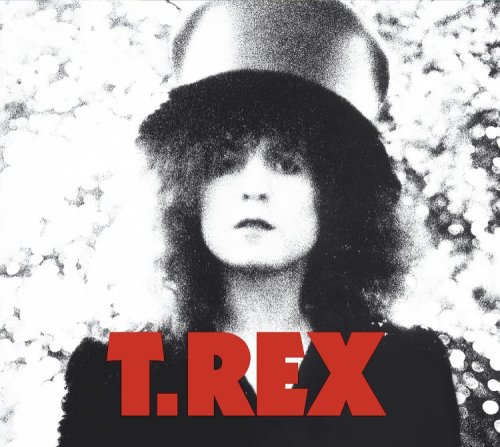 |
| The Slider |
Bolan appears in silver frills and slacks on TV. Then (The) Sweet crash onto the scene with Co-Co.
Singer Brian Connolly appearing in a lemon jumpsuit on TV, at this point the whole band have very styled, permed, long hair. Previously the Sweet had been producing a lot of Bubblegum pop songs. Now they turned their hand to rock. The public and press never went easy on them. Nicky Chinn - who is responsible for a lot of their songs - brought in session musicians to play on their albums despite the Sweet being able to play. When the story broke in the press everyone was very angry. Now, of course, it's not such an unusual thing.
Sweet wanted to get away from this controversy and into some proper Glam Rock. So what they did was make their B-sides heavier and more rock'n'roll and only play the B-sides at gigs. So, when they turned up in Kilmarnock and play glam rock wearing lipstick and eye-shadow it's fair to say that it caused a big ol' riot. Not entirely a bad thing as they turned their experience into a hit song: Ballroom Blitz
Still in 1971 Slade kick in with Get Down and Get With It. Noddy Holder storms onto our screens in a flat cap, plus fours and platform brogues.
1972
Marc Bolan voted most popular since Elvis and T-Rex release singles in
January: Telegram Sam
April: Deborah
and May: Metal Guru
By this point, Glam is really catching on and Elton John thought he'd have a go (before the hair plugs) with Rocket Man
Then Gary Glitter steps into the fray. Gary is a huge star throughout the 70s and produces many great songs. But in 1997 he's arrested over child pornography found when his laptop is taken for repair in PC World. He is sentenced to four months in prison for thousands of offending pictures, and on his release flees to Spain. He's discovered by the press and runs to Gibraltar. He's discovered again and again and moves to Cuba, Mexico, South Africa, Zibabwe, Colombia, Portugal, Brazil, Venezuala and settles in Cambodia. He is deported from Cambodia to Vietnam in 2002 for suspected child abuse and then arrested in 2005 for sexual abuse of minors. Arrested again in 2006 and goes to jail. He's released in 2008 and flees to London, then to China where he is arrested again. And deported again. Back to the UK. There he has a travel ban and signs the Sex Offenders registry.
It's a shame as The Glitter band still continue to tour and Gary's behaviour still follows them like the elephant in the room.
Back to 1972. In July Bowie hits us with Starman and wears a multicoloured knitted body stocking on TV.
Also in July Alice Cooper hits us with School's Out
Bowie's a massive hit and shares his sucess with the then floundering Mott the Hoople. Bowie goes to see them play in Croydon (I know, right...) and gives them, a present, the song "All the Young Dudes" which catapults them to the top of the charts again.
Next up comes ELO. They get involved in Glam with the 10538 Overture
and even, implausibly, the Osmonds have a try with Crazy Horses.
Bowie then releases John I'm Only Dancing in October and Jean Genie in December
Just before 1972 ends, Jeff Beck wades in with Hi Ho Silver Lining
1973
Wizzard make headway with increasingly outrageous appearances on Top of the Pops.
Then Mud
Gary Glitter
Bowie
Slade
Alice Cooper
Suzi Quattro
Wizzard
Mott the Hoople
Sweet
and even David Essex
gather speed toward the end of '73 and we're treated to a Christmas Number One showdown of
Roxy Music - Street Life
T Rex - Truck on Tyke
Cozy Powell - Dance with the Devil
Mott the Hoople - Roll Away the Stone
Wizzard - Wish It Could Be Christmas Every Day
and Slade - Merry Xmas Everybody
Slade won.
1974.
'74 brings The Glitter Band out from behind Gary with Angel Face
'74 also sparks off Sparks career. They're still going to this day.
Alvin Stardust joins in with My Coo Ca Choo
as does Cockney Rebel with Mr. Soft
And Showaddywaddy
Then comes Christmas and it's crowned with Mud - Lonely This Christmas
The End
Then by April '75 it's all over. David Essex undoes all his good work with Rolling Stone, the Bay City Rollers try to join in too late, Bowie's gone disco (Disco!) with Young Americans. Sweet start writing their own songs, christ it's really gone to pot...
Then in 1977 Marc Bolan dies, and with him Glam Rock. Bolan never wanted to drive as he was afraid of dying, but on his way home his girlfriend crashes the car, killing him. Around the site of the crash a rock shrine grows up. Eerily his T-Rex band mate Steve Currie also dies in a car crash 4 years later.
Next comes punk, but The Darkness, Suede and David Devant and His Spirit Wife carry the Glam Rock tradition on into the modern day.
Thanks for listening.
Thursday, March 24, 2011
The Afterlife
The Afterlife
I'm going to try and cover all forms of how the world sees life after this one. Life after life. Life after death. Eternal life.
Let's start with Ancient Egypt.
Humans have "ka" (a lifeforce) that leaves the body at death. Like humans, it lives on food and drink. It must carry on eating and drinking. The way it gets this food is through the sacrifice of food that those lucky enough to be alive make. The food would then pass into the ghost realm for the ka to eat.
The "ka" then joins up with the "ba" - your personality. When the ka and ba join together they make an "akh." This is what the Egyptians would call a ghost or soul. The tombs of the deceased need constant upkeep to keep them in a good condition, as well as many rituals and sacrifices or else the akh will die. A second time. These ghosts would also require the power the "heka" (magic) that exists like The Star Wars' Force. All Gods had heka, and some priests of magicians did too. The priests would use the heka to perform The Opening of the Mouth Ceremonyso that the dead person could get some air into his mouth and nose, which'd warm up the senses and mean they'd enjoy their food and drink sacrifices all the more.
And move on to Ancient Rome
The classics believed that not doing the correct rites, sacrifices or religious observances would not only bring the wrath of the Gods aginst the wayward indivdual but also the whole state. Talk about guilt.
There were hundreds of cults in the Roman religion. Some were public cults and others private. They had so many feats and festivals that dies fasti (sacred days) outnumbered normal days.
and Ancient Greece
When you die you become a shade (a ghost). The body left behind is given sacrifices to nourish it and coins are placed in either the eyes or mouth for you to pay the boatman to take you across the river Styx (no relation to "living in the Sticks" by the way - which is a baseball term).
Then you go down the river of misery and past Cerberus - he's quite friendly despite popular belief. He only gets nasty, of course, when you try to get out.
You are then judged by the three Fates and given a chance to justify what you did in your life. Those three Fates are Minos - that's the guy who built the labrynth and installed the Minotaur in it. What happened was that Poseidon wanted a bull sacrificed to him, but at the last minute Minos switched his favourite bull for a less good one and Poseidon was practically apopleptic. He cursed Paciphae (Minos' wife) with bestiality (animal sex), and made it so that she could only be satisfied by a male bull (we'll leave the details to the reader's imagination). So Minos built a giant wooden bull for Paciphae to get inside and get freaky with whatever nearby bull was passing at the time. She got preggers and gave birth to a half-bull half-man creature (interestingly enough, this also happens in 120 Days of Sodom by the Marquis de Sade). To hide him away Minos got Daedalus - a local engineer and thinker dude to construct an amazing maze (or labrynth) so that he could banish this freak of nature from sight.
To keep the Minotaur (as it was called) alive, they fed him 14 people a year. Then in a move well before Dan Brown's time, thought to keep all this a secret by feeding Daedalus and his son, Icarus, to the Minotaur. Course Daedalus had built in an escape plan, and made some wings together, held with wax. Icarus flew too close to the sun, you know how that played out. Minos went to exact his revenge on Daedalus using a conch shell a piece of string and an ant (look it up) and was eventually tricked into taking a hot bath. A very hot bath. And died.
All this was enough to impress the Gods into giving him a encumbant position in the afterlife.
They also gave his brother (Rhidamanthus) a job as he was an excellent ruler that Minos had driven out. The third judge and Fate is Aeacus. He was a bloody good King too. Although he had the poor luck of ruling over the Myrmidons, a race of ant-people related to the original she-ant Myrmidon, daughter of Eurymedousa, who was seduced by Zeus in the form of an ant. (Again, we'll leave that image to you, the reader.)
These three fates then pick where you go to: purgatory? Yes, if you've been a bit naughty. The Elysian Fields? Only if you've been really good. Like a warrior or hero. Off you go to the Plain of Asphodel if you're just an average Joe. Been bad? Really bad. Off to Tartarus with you! There you'll be dipped in lava, have your liver eaten out a bit, push rocks up a hill, etc. But the ancient Greeks had quite a progressive view of eternal punishment though. You could work your way up the ladder into a better afterlife, if you worked hard or pulled a few strings.
Hesiod said that the Greek afterlife was "9 days fall" from Earth. But, if a human falls at 122/mph (terminal velocity), he'd end up 26,352 miles below the surface of the Earth. The Earth, though is only 7929 miles thick, and would only take you 40 minutes to get through. Meaning you'd be 18,423 miles above the Earth's surface (that's about 1/10th of the way to the Moon) on the other side of the globe, somewhere above New Zealand for Greeks. Not China, as originally thought. To end up in China, you'd have to dig a hole through the Earth in Argentina, Chile, Peru or Brazil.
Christianity
Christians believe a soul is the life breath. This comes from the term "nephesh" in the original version of Genesis. This is where God breathes the breath of life into Adam. This breath returns to God after the body dies as it is God's innermost aspect of humans, and the definition of being made in God's image.
But where does it go? To an intermediate state? In the Old Testament it's called sheol - a storage facility of souls - where the soul is kept until Judgement Day. At this point the good ones get immortal bodies to live in the Garden of Eden. The bad go to hell. In sheol, the souls are in a state called soul sleep. It means that souls aren't immortal, funnily enough, as they have to come back to life for Judgement Day. Some Christians believe that your soul goes straight to heaven or hell for a taster session, then back for Judgement Day before spending the rest of eternity in their designated roles.
Heaven is, of course, a dwelling place for God. It's like Eden apparently, and Hell is often seen as a lake of burning sulpher etc. But it's quite hard to tie down the Bible for an exact description of either afterlife. Even Pope John Paul II said that rather than a place it's a state of being for anyone who has accepted or rejected God. This caused a bit of an uproar at the time, but does highlight how most of our idea of Hell comes from Dante and not the Bible, which doesn't really describe anything.
Judaism
So in Judaism, if you're really good you go to the World To Come (Olam Haba), in which they will inhabit a Garden-of-Eden-like place, or be cast into the barren Gehenna (Hell). You might get a chance to atone in the after-life though and go through a re-schooling period.
Islam
In Islam the more good deeds you do, the higher your level of Imam and the more Gates of Jannah and Pillars of Islam you observe, the better place you get in heaven. There Gates of Jannah are thus:
If you're bad or don't do enough of these things you go to Jahannam where you will experience
They believe in reincarnation whereby you go through the cycle plenty of times until you become one with God. Your body is a shell and you go up and down in the scale of things depending on your Karma. Inbetween each incarnation you get to experience some punishments or rewards (like a bonus round) depending on your behaviour.
Buddhism
Similar to Hinduism but instead of moving between shells and getting the perfect life right, your soul is on a journey like a cosmic game of snakes and ladders where you're being born into the new life in the same condition as you left the previous one. Eventually you leave the cycle and experience Enlightenment, but you don't become one with God like in Hinduism.
Sikhism
A more structured version of reincarnation: a good live moves you up one level, and a bad life down one. Plants are at the bottom, up through bugs, fish, animals and Humans and then Oneness with God at the top. You also get a choice whether to become One with God or return to serve the people of the planet Earth.
Zoroastrianism
The battle of Good vs Evil exists in everyone and after death the soul lingers on and all the spirits of the good deeds have a massive scrap with the spirits of the bad deeds and the winner drags the soul off to the respective afterlife.
Wiccan
They believe in reincarnation, but in some strains they believe that there are only a set number of Wiccan souls and only Wiccans are reincarnated as Wiccans.
Ancient Norse Religion
If you die in battle as a glorious warrior you go the Valhalla - the Hall of the Slain. If you're average you go to Hel (with one L) - aka the Covered Hall, to be with your loved ones. If you're a bad egg you go to Niflhel where you're punished in the usual ways.
I'm going to try and cover all forms of how the world sees life after this one. Life after life. Life after death. Eternal life.
Let's start with Ancient Egypt.
Humans have "ka" (a lifeforce) that leaves the body at death. Like humans, it lives on food and drink. It must carry on eating and drinking. The way it gets this food is through the sacrifice of food that those lucky enough to be alive make. The food would then pass into the ghost realm for the ka to eat.
The "ka" then joins up with the "ba" - your personality. When the ka and ba join together they make an "akh." This is what the Egyptians would call a ghost or soul. The tombs of the deceased need constant upkeep to keep them in a good condition, as well as many rituals and sacrifices or else the akh will die. A second time. These ghosts would also require the power the "heka" (magic) that exists like The Star Wars' Force. All Gods had heka, and some priests of magicians did too. The priests would use the heka to perform The Opening of the Mouth Ceremonyso that the dead person could get some air into his mouth and nose, which'd warm up the senses and mean they'd enjoy their food and drink sacrifices all the more.
And move on to Ancient Rome
The classics believed that not doing the correct rites, sacrifices or religious observances would not only bring the wrath of the Gods aginst the wayward indivdual but also the whole state. Talk about guilt.
There were hundreds of cults in the Roman religion. Some were public cults and others private. They had so many feats and festivals that dies fasti (sacred days) outnumbered normal days.
and Ancient Greece
When you die you become a shade (a ghost). The body left behind is given sacrifices to nourish it and coins are placed in either the eyes or mouth for you to pay the boatman to take you across the river Styx (no relation to "living in the Sticks" by the way - which is a baseball term).
Then you go down the river of misery and past Cerberus - he's quite friendly despite popular belief. He only gets nasty, of course, when you try to get out.
You are then judged by the three Fates and given a chance to justify what you did in your life. Those three Fates are Minos - that's the guy who built the labrynth and installed the Minotaur in it. What happened was that Poseidon wanted a bull sacrificed to him, but at the last minute Minos switched his favourite bull for a less good one and Poseidon was practically apopleptic. He cursed Paciphae (Minos' wife) with bestiality (animal sex), and made it so that she could only be satisfied by a male bull (we'll leave the details to the reader's imagination). So Minos built a giant wooden bull for Paciphae to get inside and get freaky with whatever nearby bull was passing at the time. She got preggers and gave birth to a half-bull half-man creature (interestingly enough, this also happens in 120 Days of Sodom by the Marquis de Sade). To hide him away Minos got Daedalus - a local engineer and thinker dude to construct an amazing maze (or labrynth) so that he could banish this freak of nature from sight.
To keep the Minotaur (as it was called) alive, they fed him 14 people a year. Then in a move well before Dan Brown's time, thought to keep all this a secret by feeding Daedalus and his son, Icarus, to the Minotaur. Course Daedalus had built in an escape plan, and made some wings together, held with wax. Icarus flew too close to the sun, you know how that played out. Minos went to exact his revenge on Daedalus using a conch shell a piece of string and an ant (look it up) and was eventually tricked into taking a hot bath. A very hot bath. And died.
All this was enough to impress the Gods into giving him a encumbant position in the afterlife.
They also gave his brother (Rhidamanthus) a job as he was an excellent ruler that Minos had driven out. The third judge and Fate is Aeacus. He was a bloody good King too. Although he had the poor luck of ruling over the Myrmidons, a race of ant-people related to the original she-ant Myrmidon, daughter of Eurymedousa, who was seduced by Zeus in the form of an ant. (Again, we'll leave that image to you, the reader.)
These three fates then pick where you go to: purgatory? Yes, if you've been a bit naughty. The Elysian Fields? Only if you've been really good. Like a warrior or hero. Off you go to the Plain of Asphodel if you're just an average Joe. Been bad? Really bad. Off to Tartarus with you! There you'll be dipped in lava, have your liver eaten out a bit, push rocks up a hill, etc. But the ancient Greeks had quite a progressive view of eternal punishment though. You could work your way up the ladder into a better afterlife, if you worked hard or pulled a few strings.
Hesiod said that the Greek afterlife was "9 days fall" from Earth. But, if a human falls at 122/mph (terminal velocity), he'd end up 26,352 miles below the surface of the Earth. The Earth, though is only 7929 miles thick, and would only take you 40 minutes to get through. Meaning you'd be 18,423 miles above the Earth's surface (that's about 1/10th of the way to the Moon) on the other side of the globe, somewhere above New Zealand for Greeks. Not China, as originally thought. To end up in China, you'd have to dig a hole through the Earth in Argentina, Chile, Peru or Brazil.
Christianity
Christians believe a soul is the life breath. This comes from the term "nephesh" in the original version of Genesis. This is where God breathes the breath of life into Adam. This breath returns to God after the body dies as it is God's innermost aspect of humans, and the definition of being made in God's image.
But where does it go? To an intermediate state? In the Old Testament it's called sheol - a storage facility of souls - where the soul is kept until Judgement Day. At this point the good ones get immortal bodies to live in the Garden of Eden. The bad go to hell. In sheol, the souls are in a state called soul sleep. It means that souls aren't immortal, funnily enough, as they have to come back to life for Judgement Day. Some Christians believe that your soul goes straight to heaven or hell for a taster session, then back for Judgement Day before spending the rest of eternity in their designated roles.
Heaven is, of course, a dwelling place for God. It's like Eden apparently, and Hell is often seen as a lake of burning sulpher etc. But it's quite hard to tie down the Bible for an exact description of either afterlife. Even Pope John Paul II said that rather than a place it's a state of being for anyone who has accepted or rejected God. This caused a bit of an uproar at the time, but does highlight how most of our idea of Hell comes from Dante and not the Bible, which doesn't really describe anything.
Judaism
So in Judaism, if you're really good you go to the World To Come (Olam Haba), in which they will inhabit a Garden-of-Eden-like place, or be cast into the barren Gehenna (Hell). You might get a chance to atone in the after-life though and go through a re-schooling period.
Islam
In Islam the more good deeds you do, the higher your level of Imam and the more Gates of Jannah and Pillars of Islam you observe, the better place you get in heaven. There Gates of Jannah are thus:
- Baaab us-Salaah (prayer)
- Baab ul-Jihad (Jihad gets a bad press, but it's more to do with a struggle than a war. It can be a struggle for a noble cause or promoting peace)
- Baab us-Sadaqah (Charity)
- Baab us-Rayyan (Fasting)
- Baab ul-Hajj (Pilgrimage)
- Baab ul-Aiman (Resisting temptation)
- Baab udn-Dhikr (showing zeal in remembering God)
- Baab ul-Kaazimeenal Ghaiz wal Aafina Anim Naas - (Forgiveness)
If you're bad or don't do enough of these things you go to Jahannam where you will experience
- The burning of skin
- The burning off of all your skin
- Having your skin regrown and then burnt off again
- Garments of fire being put out with boiling water
- Face on fire
- Lips burnt off
- Backs on fire
- Brain boiling
- Being spitroasted (ahem)
- Faces dragged through fire
- Eating the Zaqqum
- Which is a fruit that is really spiky, and really hot and will pierce your tongue and your throat and burn you at the same time as you eat it. It also tastes really bitter, so there.
They believe in reincarnation whereby you go through the cycle plenty of times until you become one with God. Your body is a shell and you go up and down in the scale of things depending on your Karma. Inbetween each incarnation you get to experience some punishments or rewards (like a bonus round) depending on your behaviour.
Buddhism
Similar to Hinduism but instead of moving between shells and getting the perfect life right, your soul is on a journey like a cosmic game of snakes and ladders where you're being born into the new life in the same condition as you left the previous one. Eventually you leave the cycle and experience Enlightenment, but you don't become one with God like in Hinduism.
Sikhism
A more structured version of reincarnation: a good live moves you up one level, and a bad life down one. Plants are at the bottom, up through bugs, fish, animals and Humans and then Oneness with God at the top. You also get a choice whether to become One with God or return to serve the people of the planet Earth.
Zoroastrianism
The battle of Good vs Evil exists in everyone and after death the soul lingers on and all the spirits of the good deeds have a massive scrap with the spirits of the bad deeds and the winner drags the soul off to the respective afterlife.
Wiccan
They believe in reincarnation, but in some strains they believe that there are only a set number of Wiccan souls and only Wiccans are reincarnated as Wiccans.
Ancient Norse Religion
If you die in battle as a glorious warrior you go the Valhalla - the Hall of the Slain. If you're average you go to Hel (with one L) - aka the Covered Hall, to be with your loved ones. If you're a bad egg you go to Niflhel where you're punished in the usual ways.
Subscribe to:
Posts (Atom)